Soft Washing vs. Pressure Washing: What’s the Difference?
Both methods have their place. The important part is knowing which surface needs which approach—and when more pressure can do more harm than good.
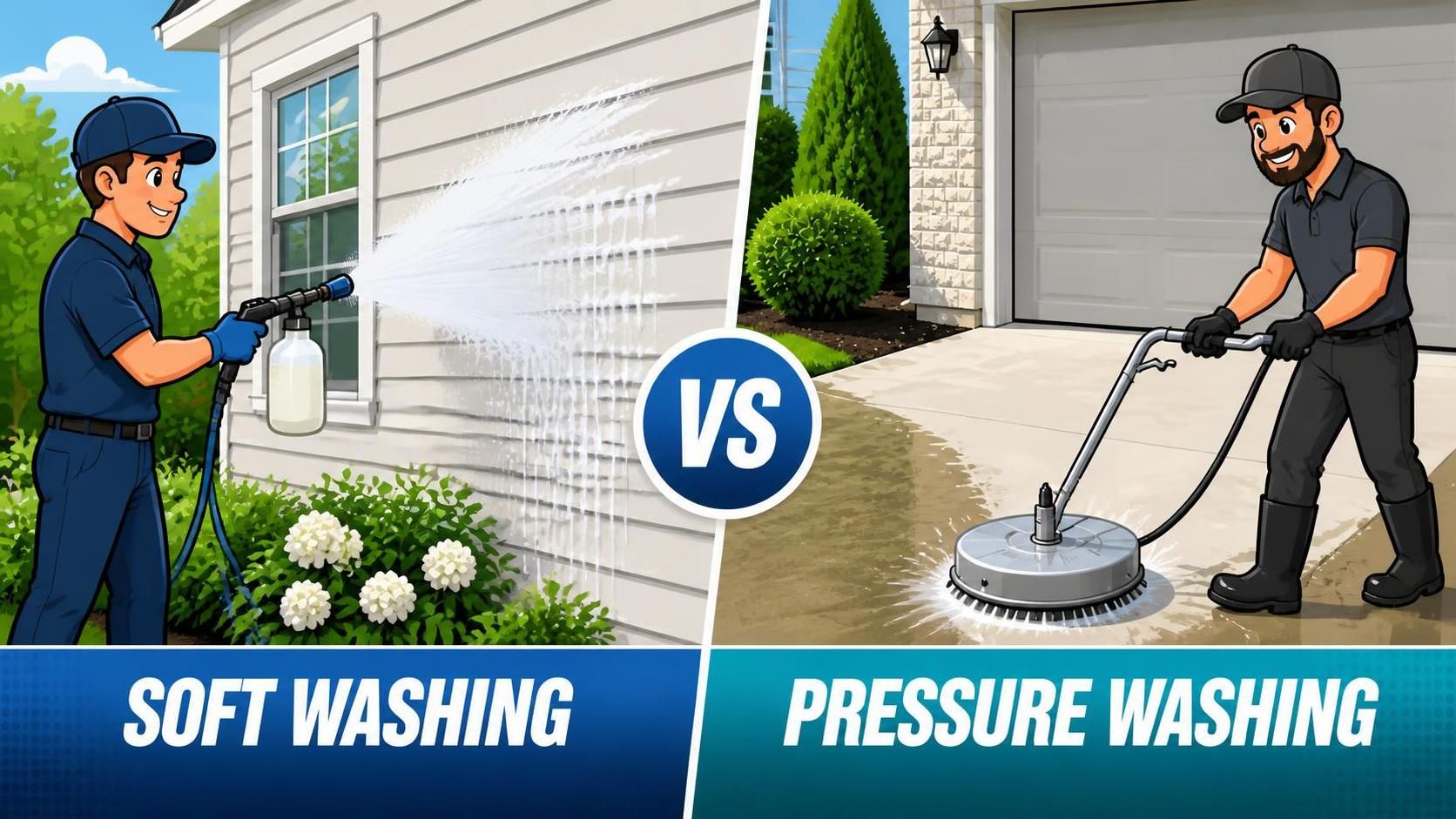
A lot of homeowners use “pressure washing” as a catch-all term for cleaning anything outside. I get why. The equipment is easy to recognize, and watching a dirty driveway turn clean is pretty satisfying.
But when you’re cleaning a house, roof, deck, fence, or concrete, the first question shouldn’t be “How much pressure can I use?” It should be: What is this surface, what’s growing or collecting on it, and what is the safest way to get it clean?
That’s really the difference between professional exterior cleaning and simply pointing a pressure washer at everything.
Pressure washing still has an important place
Pressure washing uses higher-pressure water to remove dirt and buildup from durable surfaces. Concrete is the obvious example. Driveways, sidewalks, and many patios can handle a cleaning process that would be completely inappropriate for siding or roofing.
Even then, more pressure is not automatically better. Newer concrete, older concrete, damaged areas, coatings, and certain masonry surfaces can all react differently. Good results come from matching the equipment and technique to the surface—not just turning the pressure up.
Where soft washing comes in
Soft washing takes a different approach. Instead of relying on high pressure to force contamination off a surface, it uses lower pressure along with the proper cleaning solution to break down organic growth such as algae and mildew.
That makes it useful for many of the exterior surfaces around a home that should not be blasted with high pressure.
House siding is a good example. If the green or dark buildup on the siding is organic growth, the goal is to treat and remove that growth without putting unnecessary pressure on the siding, trim, seals, or areas around windows and doors.
Why siding should not be treated like concrete
There are plenty of videos online showing someone cutting a clean line through concrete with a pressure-washer wand. That looks great on concrete. It does not mean the same approach belongs on the side of a house.
Too much pressure can damage paint, mark softer materials, disturb oxidation, or push water behind places where it does not belong. A proper house wash is usually much more about the cleaning process than brute force.
That is one of the reasons I prefer to think of the job as exterior cleaning rather than simply pressure washing. The equipment is only part of it. Knowing when not to use high pressure matters just as much.
Roofs are a completely different situation
A roof is not a driveway, and it should never be treated like one.
Those dark streaks you see on many asphalt-shingle roofs are commonly related to biological growth. Trying to blast the discoloration away with high pressure can damage the shingles and their protective surface.
Roof cleaning calls for a low-pressure treatment designed for the roofing material and the type of growth present. The point is to clean the roof without trading a cosmetic problem for actual roof damage.
Wood takes some judgment too
Decks and fences are another place where technique matters. Wood can look tough, but aggressive pressure can leave wand marks, raise the grain, or damage softer areas.
The right approach depends on the wood, its age, condition, previous stain or coating, and what needs to be removed. Two fences that look similar from the street may not need exactly the same cleaning process once you get up close.
So which method is better?
Neither one. They do different jobs.
A property may need a low-pressure house wash, a separate roof-cleaning process, and professional pressure cleaning on the driveway—all during the same visit. Using one method everywhere would be easier, but it would not be the right way to do the work.
The basic idea is simple: identify the surface, figure out what is on it, and choose the cleaning method that gets the result without using more pressure than necessary.
What this means for homeowners in the North Carolina Triad
Our warm, humid weather gives algae, mildew, and other organic growth plenty of opportunity to show up on siding, roofs, concrete, decks, and fences. If you are seeing green growth on the north side of the house, dark roof streaks, or dingy concrete, that does not necessarily mean every surface needs the same treatment.
That is something Patella Exteriors can sort out during the estimating process. Tell us what you would like cleaned, and we will look at the surface and condition and determine the appropriate approach for the job.
If you have questions about a surface before requesting an estimate, ask. I would rather explain why a certain method makes sense than use the wrong one just because it is faster.